TILES FOR UNDERFLOOR HEATING
Which floor tiles work best over a heated floor, and what to settle first
Porcelain and ceramic tiles are the most dependable choice over underfloor heating. They let heat through readily, stay stable as the floor warms and cools, and suit the bathrooms and kitchens where a heated floor makes the most difference. Natural stone works too, with more care over its thickness and how it is fixed.
Tiles feel cold because they draw warmth away from bare feet. Put heat underneath and the same quality works in your favour, which is why a tiled floor and underfloor heating suit each other so well.
The tile is only half of the decision, though. How the floor is prepared, which adhesive goes down and how the heating is first switched on matter just as much. Here is what to weigh up when a heated floor is part of the plan, whether it is an ensuite in Belfast or a kitchen extension in Lisburn.
WHY PORCELAIN SUITS A HEATED FLOOR
Dense, stable and quick to pass heat through.
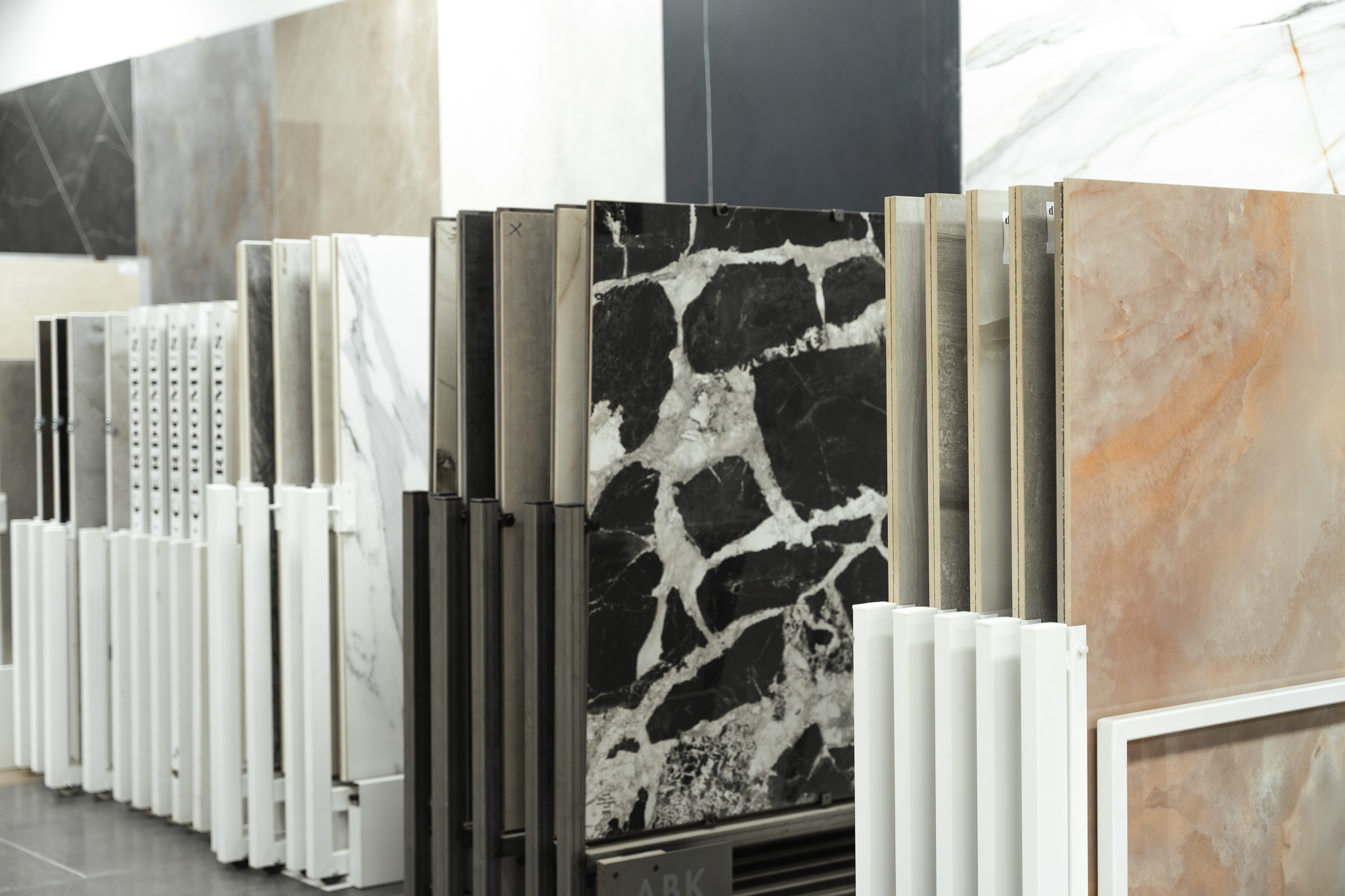
Porcelain is fired at a higher temperature than standard ceramic, which makes it denser and far less absorbent. Over a heated floor that density helps: warmth moves through the tile readily, and the tile itself is unbothered by the daily cycle of heating up and cooling down.
It also leaves you plenty of choice. Our porcelain range covers marble, stone, concrete and wood effects, so picking a tile for a heated floor rarely means settling for a look you did not want.
CERAMIC AND NATURAL STONE
Both can work. Each needs a different check.
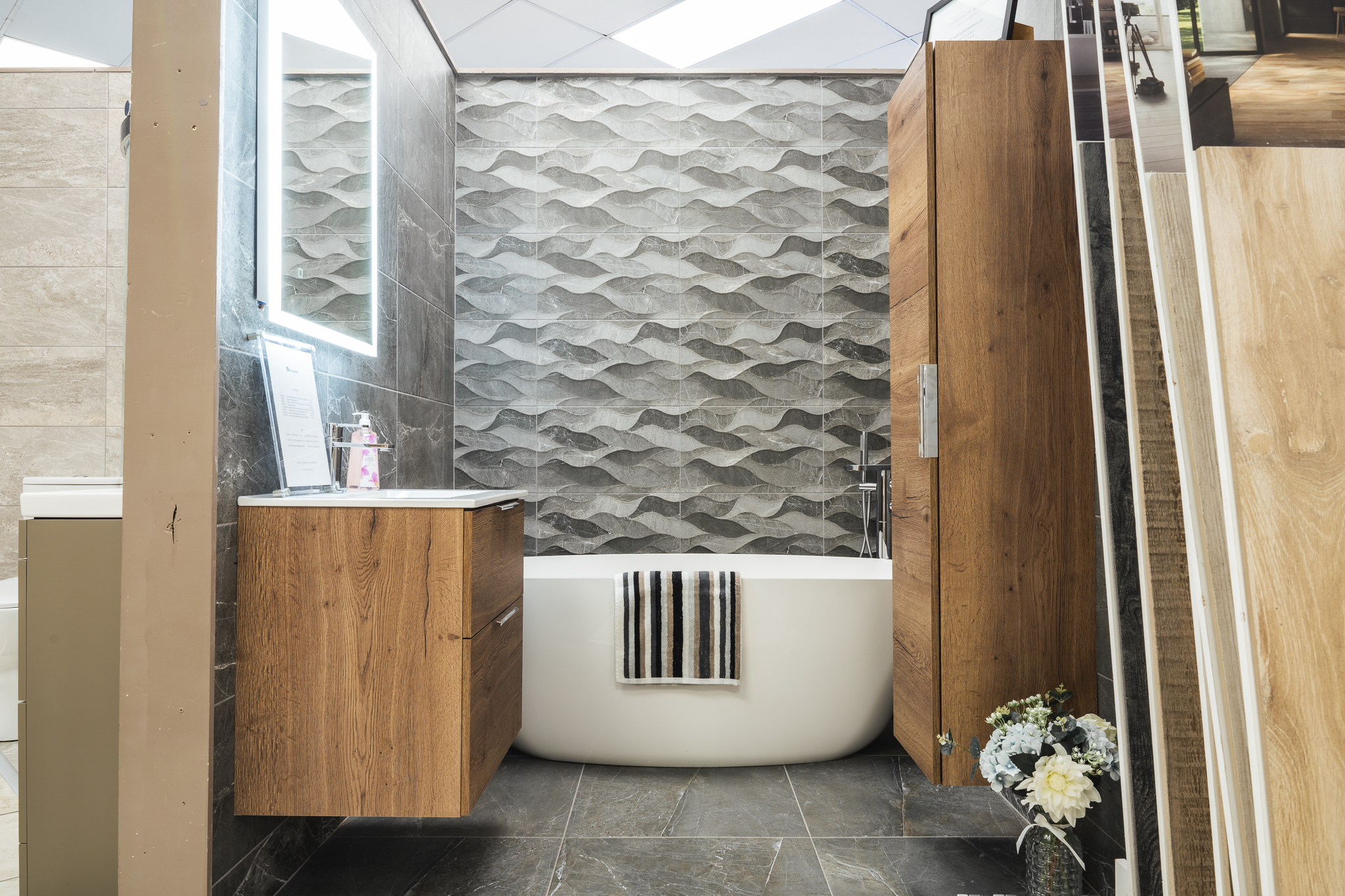
Ceramic conducts heat well and is lighter and easier to cut than porcelain. The check is whether the tile is rated for floors. Many ceramic tiles are made for walls only, and a wall tile will not stand up to foot traffic, heated or not.
Natural stone holds heat well, but it is usually thicker and heavier, so it takes longer to warm through and needs an adhesive and sealer suited to it. If it is the look of stone you are after, stone-effect porcelain gives you the veining and texture with less to manage.
Wood-effect porcelain: the look of timber on a warm floor
Timber is a natural insulator, so it slows heat on its way into the room, and not every wood floor is suitable for use over heating. Wood-effect porcelain gives you the grain and the plank shape with the practical qualities of a tile, which makes it worth a look for heated kitchens, living spaces and bathrooms.
Our wood-effect tiles come in plank sizes that can be laid straight or in a herringbone, and there are more ideas for family kitchens in our guide to kitchen tiles and flooring for NI homes.
Large format over heating: fewer joints, a flatter floor
Big tiles mean fewer grout lines, which suits a heated floor you want to look calm and uncluttered. They also need a floor that is flat and properly prepared, because a large tile shows any dip or rise that a small one would hide. Talk to your fitter early about levelling the floor and about a flexible adhesive suited to heated floors.
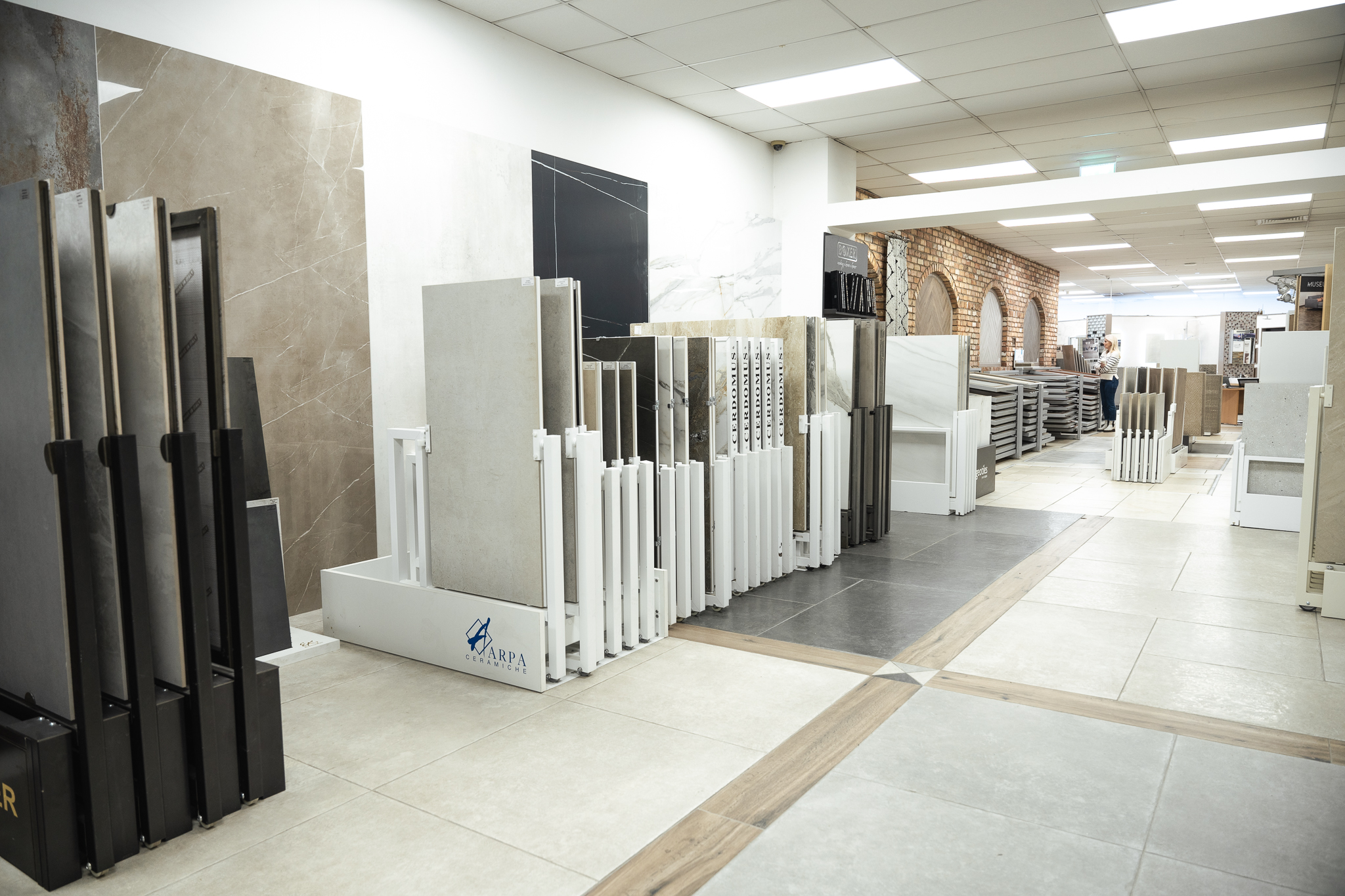
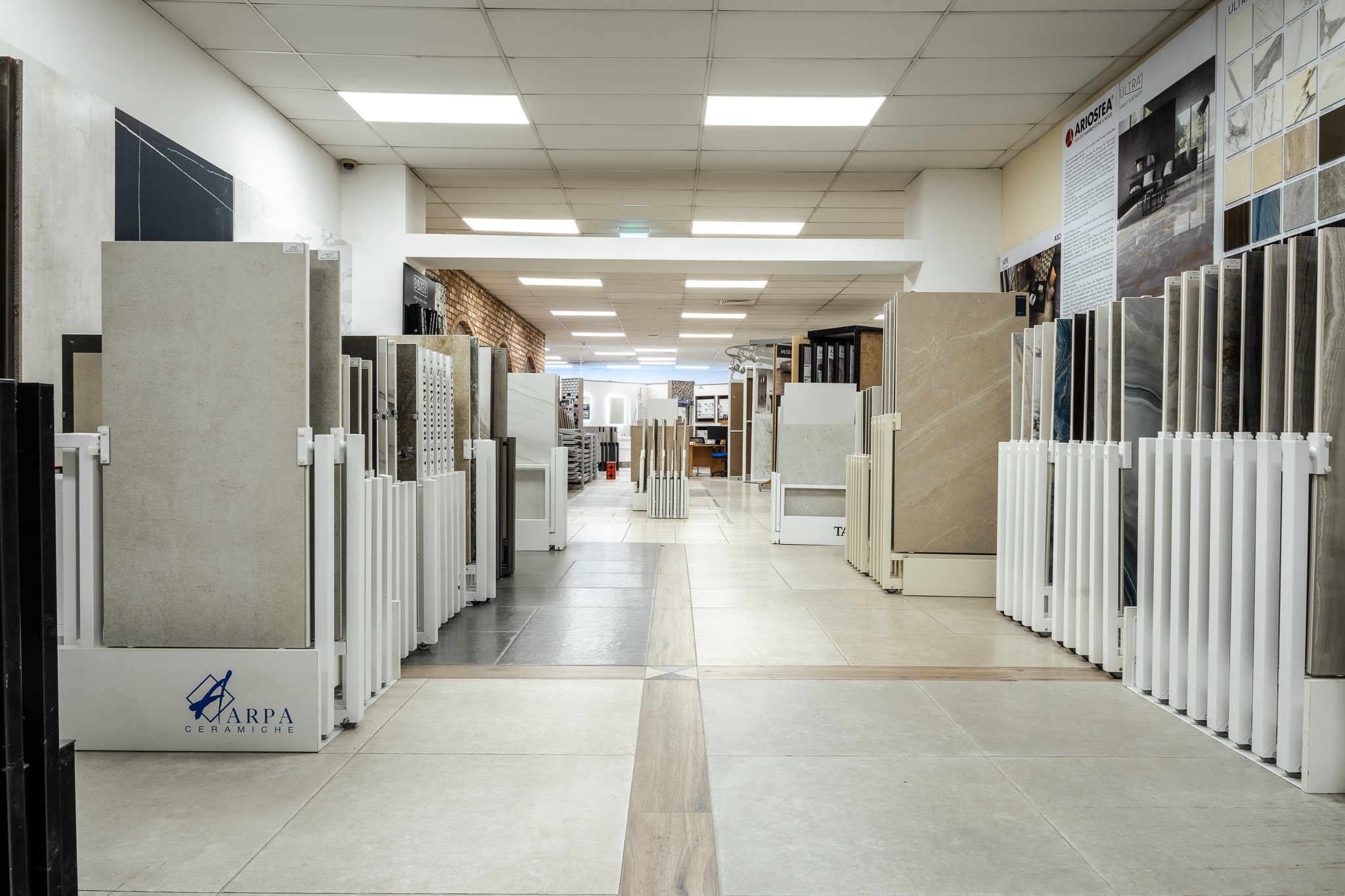
You can see large format tiles standing full size in the Moira showroom, which is the easiest way to judge how they will look across a whole room.
Four things to settle before you choose a tile.

Know the heating system
Electric mats are often used in a single room such as an ensuite. Water-based systems are more common across larger floors and new builds. Your installer will tell you which you are getting and what the floor above it needs.
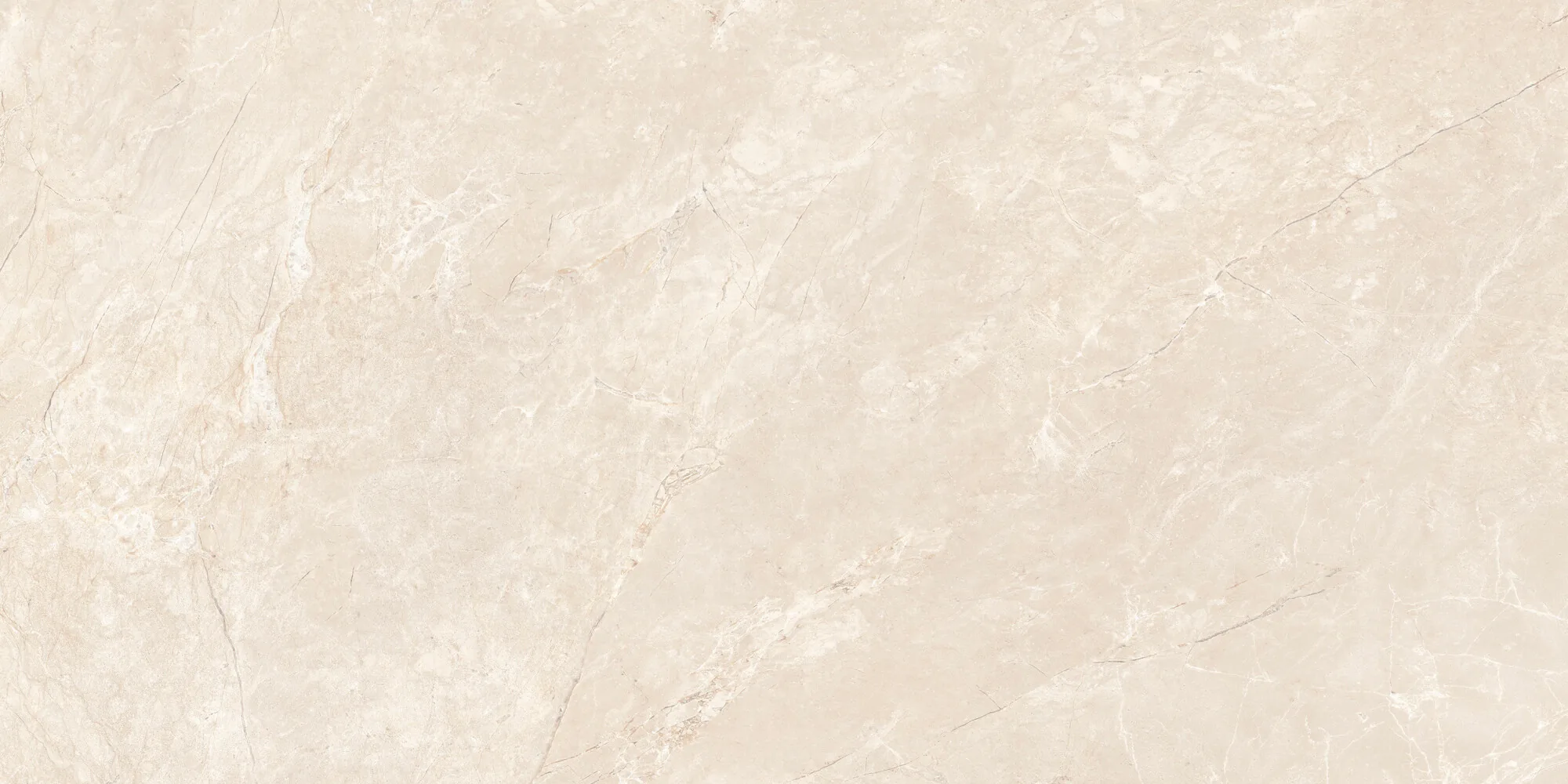
Check the tile is floor rated
Wall tiles are not made to be walked on. Choose a floor tile with enough grip for the room, especially in a bathroom or wet room where the floor will get wet.
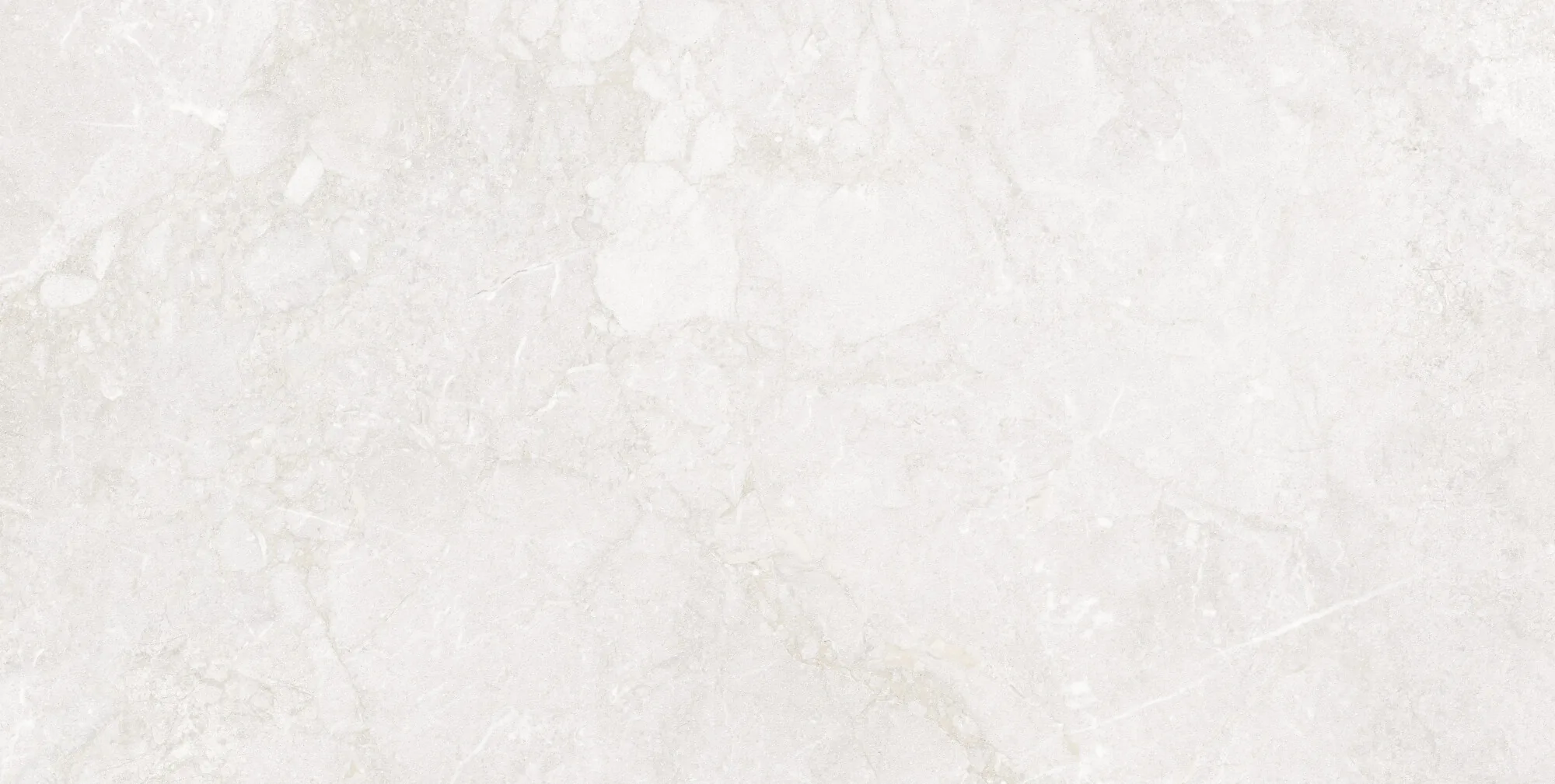
Plan the floor build-up
Levelling, insulation boards, a decoupling membrane on a timber floor and a flexible adhesive are decisions for you and your fitter. Settle them early, because they change the finished floor height.

Switch on gradually
Follow the heating and adhesive manufacturers’ instructions on when the system can be turned on after tiling, then bring it up to temperature slowly the first time.
HEATED BATHROOM FLOORS
The room where a warm floor earns its keep.
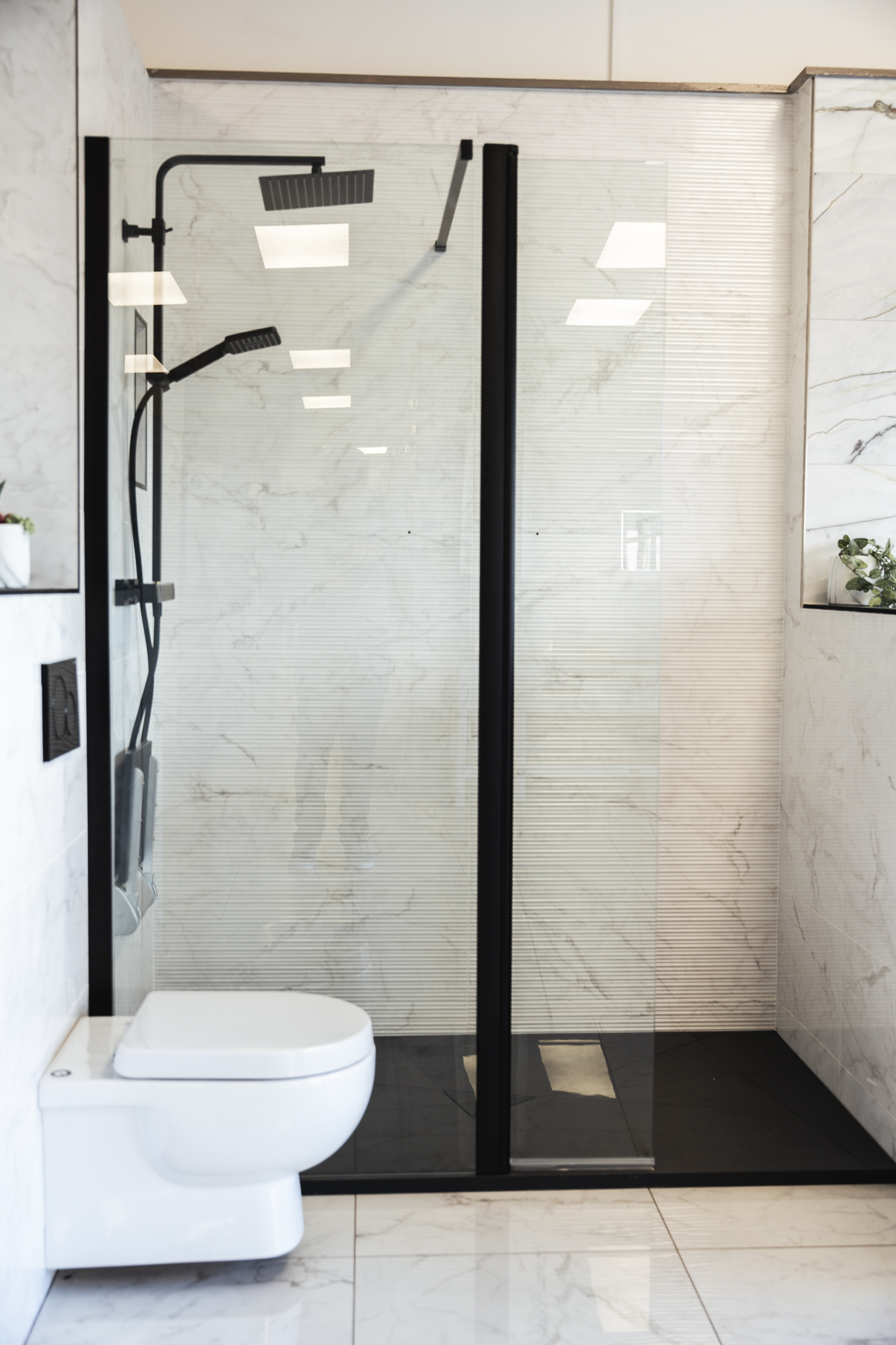
Bathrooms and ensuites are natural candidates for a heated floor. The tiles are going down anyway, the room is small enough to warm quickly, and a warm floor dries faster after a shower.
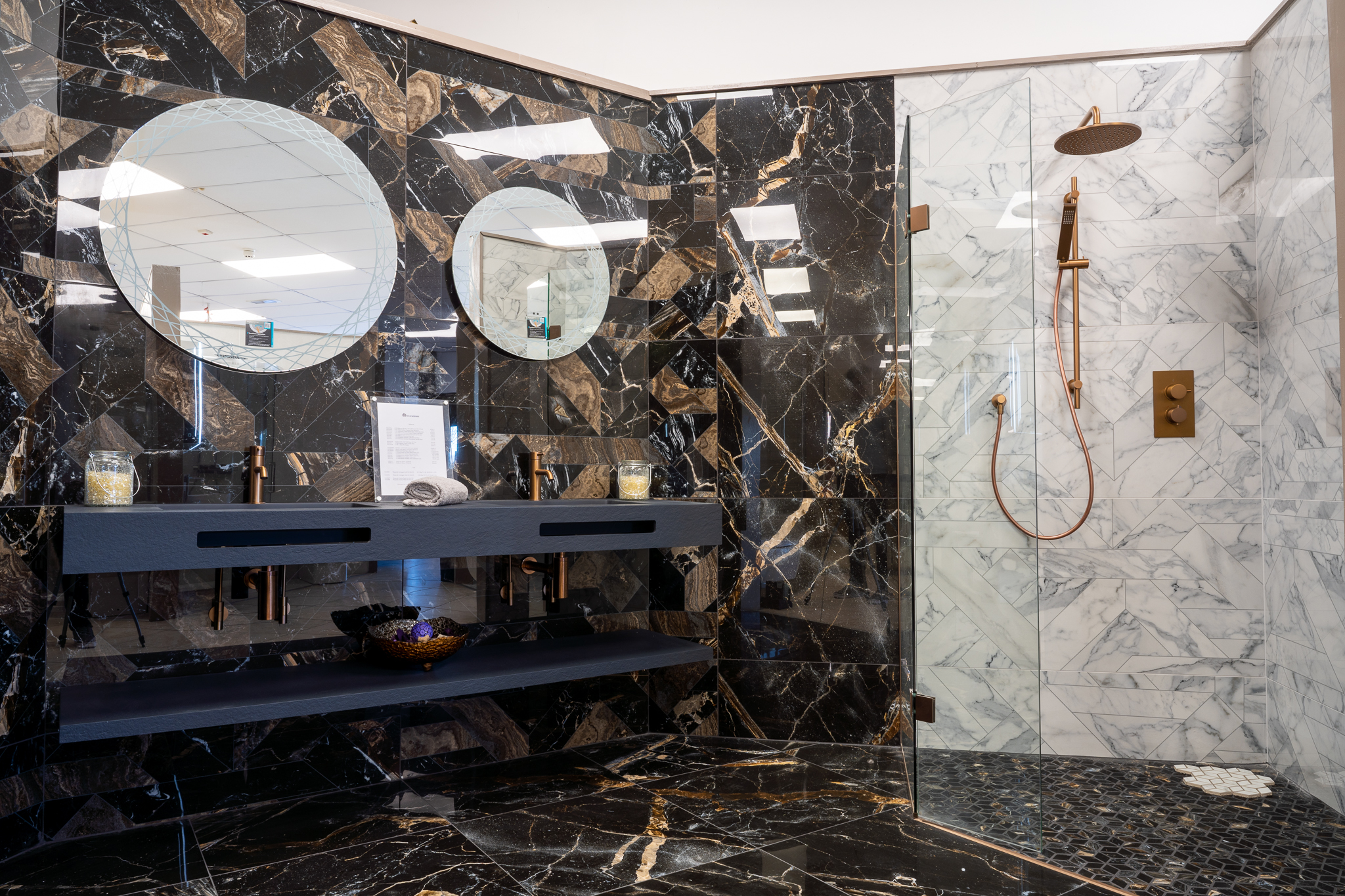
In a shower area or wet room, grip matters as much as warmth, so choose a floor tile with a suitable slip rating and let your fitter plan the falls to the drain. You can see how tiles, showers and vanity units work together in the Moira showroom before you decide.
Questions about tiles and underfloor heating.
What are the best tiles for underfloor heating?
Porcelain and ceramic are the most dependable choices. They let heat through readily and stay stable as the floor warms and cools. Porcelain is denser and harder wearing, so it suits busy floors best. Natural stone also works, with more care over thickness and adhesive.
Is porcelain or ceramic better for underfloor heating?
Both work well. Porcelain is denser and absorbs less water, which makes it the stronger choice for bathrooms, kitchens and hallways. A floor-rated ceramic tile is a sound option for rooms with lighter use. Whichever you choose, check that it is rated for floors.
Can you put underfloor heating under bathroom tiles?
Yes, and a bathroom is one of the most practical rooms for it. The heating goes in first, then the floor is prepared and tiled with an adhesive suited to heated floors. Your installer and fitter should agree the build-up so the finished floor height works with the door and the shower.
Can tiles feel warm without underfloor heating?
Not in the same way. A tile sits at the temperature of the room and draws warmth from bare feet, which is why it feels cold. A textured or wood-effect finish can make a floor look warmer, but for a floor that feels warm you need heat underneath it.
PLANNING YOUR FLOOR
Bring the floor size and the heating type.
The showroom is at 12 Meadow Road, Moira, within easy reach of Belfast, Lisburn, Lurgan and Portadown. Bring the floor area of the room, a photograph of it as it is now and, if you know it, the type of heating going in. That is enough to narrow the range to tiles that suit.
Samples are available on request, so you can see a tile in the room it is meant for before you order. If you are planning the whole bathroom, our 3D design service can lay it out first. Costs may apply.